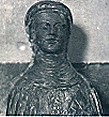
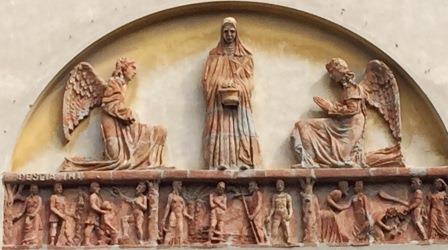
Virgin of the Order of Malta
Memorial: 28 May
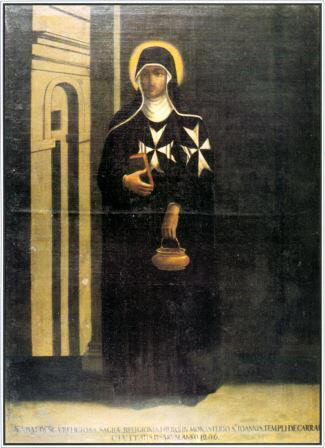
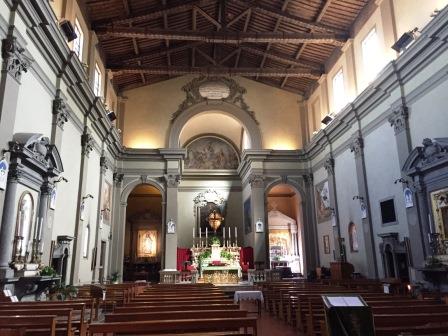
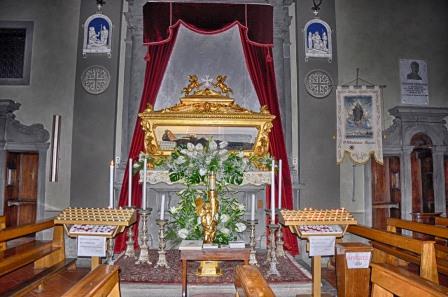
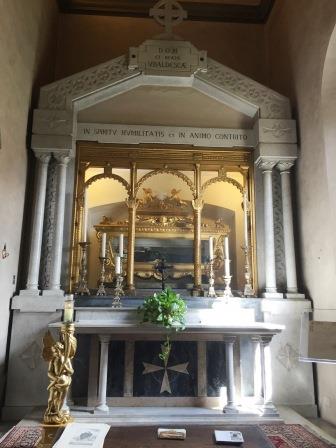
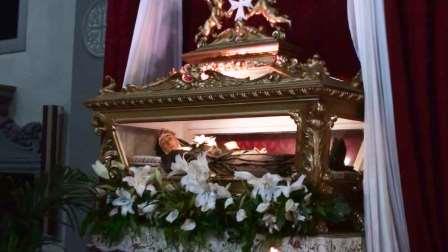
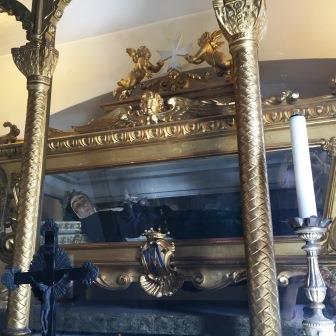
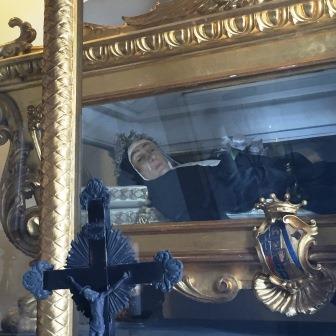
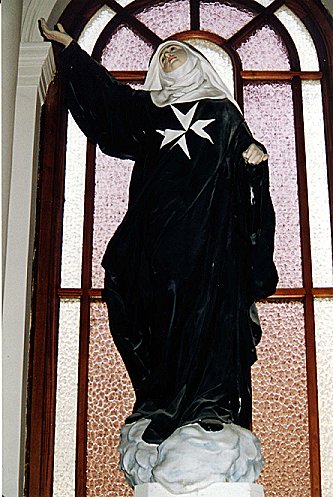
She was born in Calcinaia, near Pisa, in 1136 and joined the Order of St. John of Jerusalem at the age of fifteen. She worked for fifty-five years in the infirmary attached to the monastery at Pisa, caring for her neighbour out of love of God. She died on 28 May 1206 and her body was taken back to Calcinaia where it is enshrined.
Prayer:
O God, pride of the humble lover of virginity, you called Saint Ubaldesca to the religious life in the Order of St. John of Jerusalem: grant that through her prayers and example we may rejoice in being humble and follow you, with pure minds. We ask this through our Lord Jesus Christ your Son, who lives and reigns with you and the Holy Spirit, one God, for ever and ever. Amen.
(From: The Missal with readings of the Order of St. John of Jerusalem of Rhodes, & of Malta, London 1997)
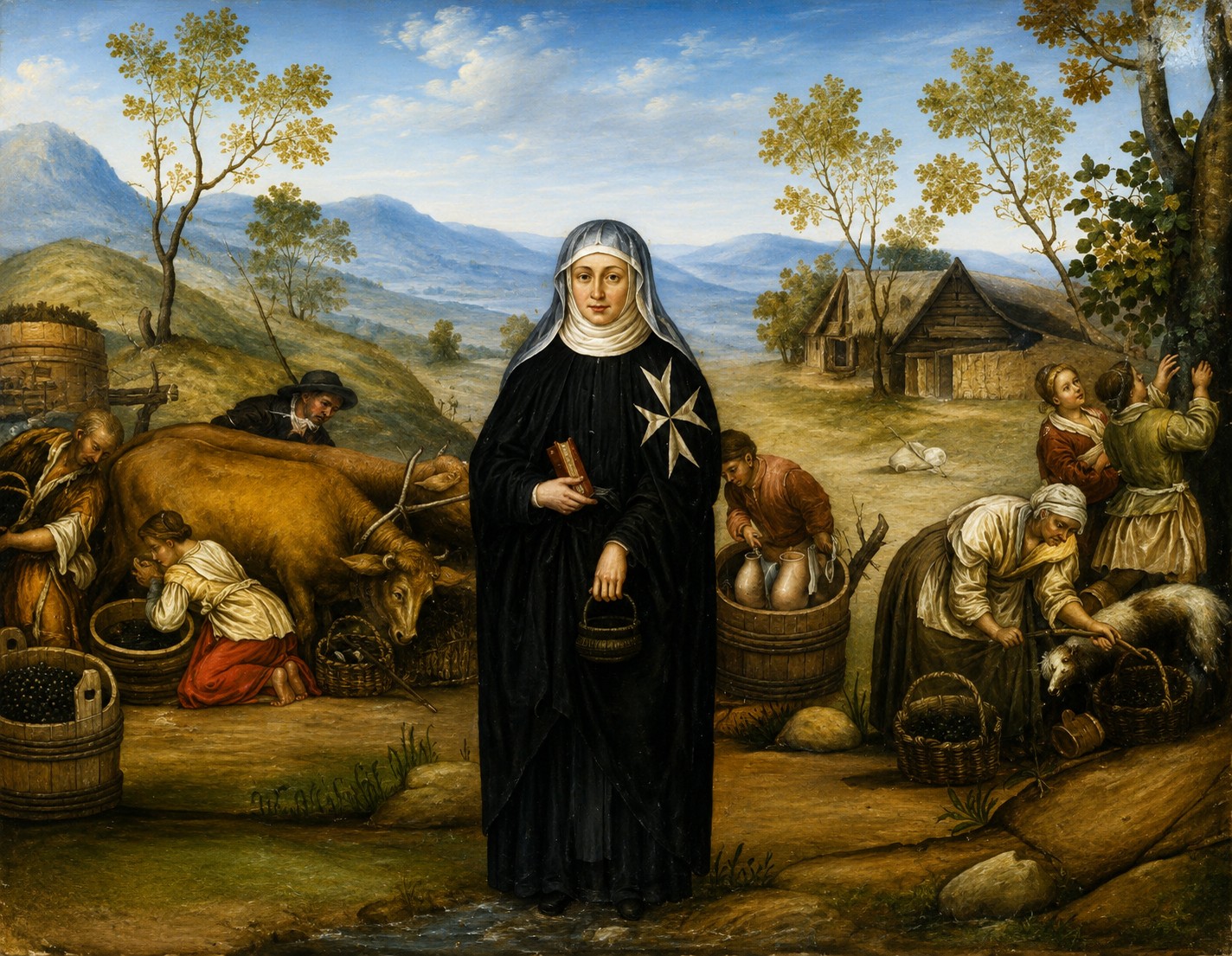
Tuscany saw the birth of Ubaldesca, at Castello di Calcinaia, in the county of Pisa, in 1136. Her parents, humble and simple farmers, were Godfearing people and good Christians; they taught her obedience and the love of silence which they themselves practiced. She was trained early to work at her household tasks and to pray constantly. She already macerated her poor little body and had resolved never to refuse the requests of the unfortunate. She gave them what she could and, when she had nothing to give, she offered at least the consolation of her smile, paying close attention to the tale of the troubles of each with fraternal understanding. No one left her without being comforted.
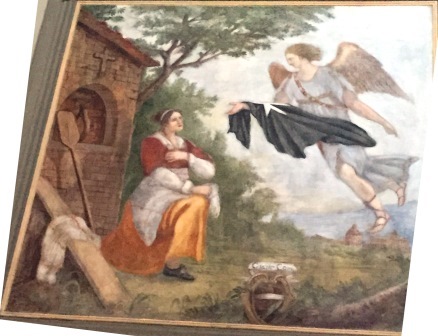
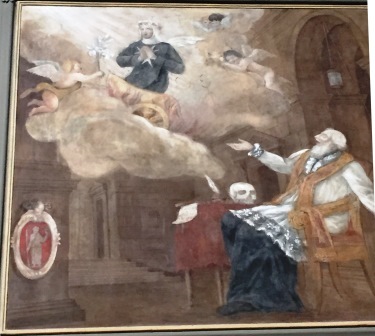
She soon understood the gravity of life and wondered what form hers should take to please God; she implored Him for guidance. At the age of fourteen, one day as she was baking the family's bread, she had the vision of an angel who ordered her to enter the convent of the Sisters of Saint John of Jerusalem. She was astonished, and said:
"But, I have no dowry. And my parents cannot give me any".
"The mothers have not so much need for dowries as for virtues", replied the angel.
Ubaldesca smiled. "But what if I have no virtues?".
And the angel in the same tone of voice: "The Holy Ghost will supply". Then, gravely: "There is no woman in Pisa who will be more full [of virtues] than you. And because of you, of your merits, the city will be delivered from great perils ".
The messenger of God disappeared, and the girl, forgetting the oven and the bread in it, ran off to the fields where her parents were at work to tell them what had happened and to ask their permission to go away. Without more reflection or delay, they acquiesced; the three left for the convent of St. John of the Temple of Carraia in Pisa.
Forewarned by the angel, the abbess and her forty cloistered nuns stood behind the door of the enclosure to wait for the postulant who was received as soon as she knocked. They all went to the church where Ubaldesca immediately received the red gown and black cloak in the presence of her parents who wept with Joy and sorrow and who returned home after having seen the doors of the convent close on their only daughter.
The next day, their supply of bread being exhausted, they remembered the bread in the oven, and not without irritation. They believed it to be completely charred. But, on removing the stone of the oven, they found the bread baked to perfection and as golden as never before. Not believing their eyes, they took it to the sisters, as a token of thanksgiving and a proof of the miracle.
Ubaldesca, therefore, lived at the convent, setting an example of continuous prayer, severe penance with hair shirts, scourges, fasts and abstinences, as is proper in the life of a saint. But all that behaviour was based on fundamental virtues: humility obedience, and goodness. For her charity missed no opportunities to put itself to the test, especially toward the sisters, whom she helped in all their needs promptly, solicitously, ingeniously and with alacrity. She was always affable and meek. Her smiling face shorted no traces of her mortifications. It must be added that there was some reason for this: she lived in the contemplation and company of Jesus, Mary and the saints.
Since the convent of Carraia received many nuns like Ubaldesca, rich in celestial gifts but poor in earthly goods, it is not surprising that the time came when the nuns were reduced to great poverty. In that penury our saint very humbly begged to be allowed to go to seek alms in the city for the convent. For several years, she provided for the needs not only of the sisters but also of the poor and the sick who were being sheltered in the infirmary. She was known to all and edified everyone.
On a certain Good Friday, a woman, exhausted by the long services, asked for water so as not to faint. Ubaldesca hastened to satisfy her. But theù:
"Sister, bless this water, please!"
"You cannot be serious!"
The woman insisted. The marked pallor of the sick woman forced an end to the discussion; our saint resolved to make the sign of the cross. The woman immediately tasted the drink.
"Why, it is wine!" she cried.
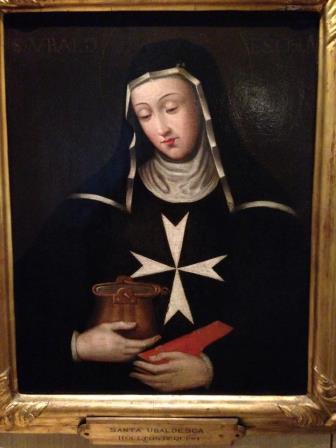
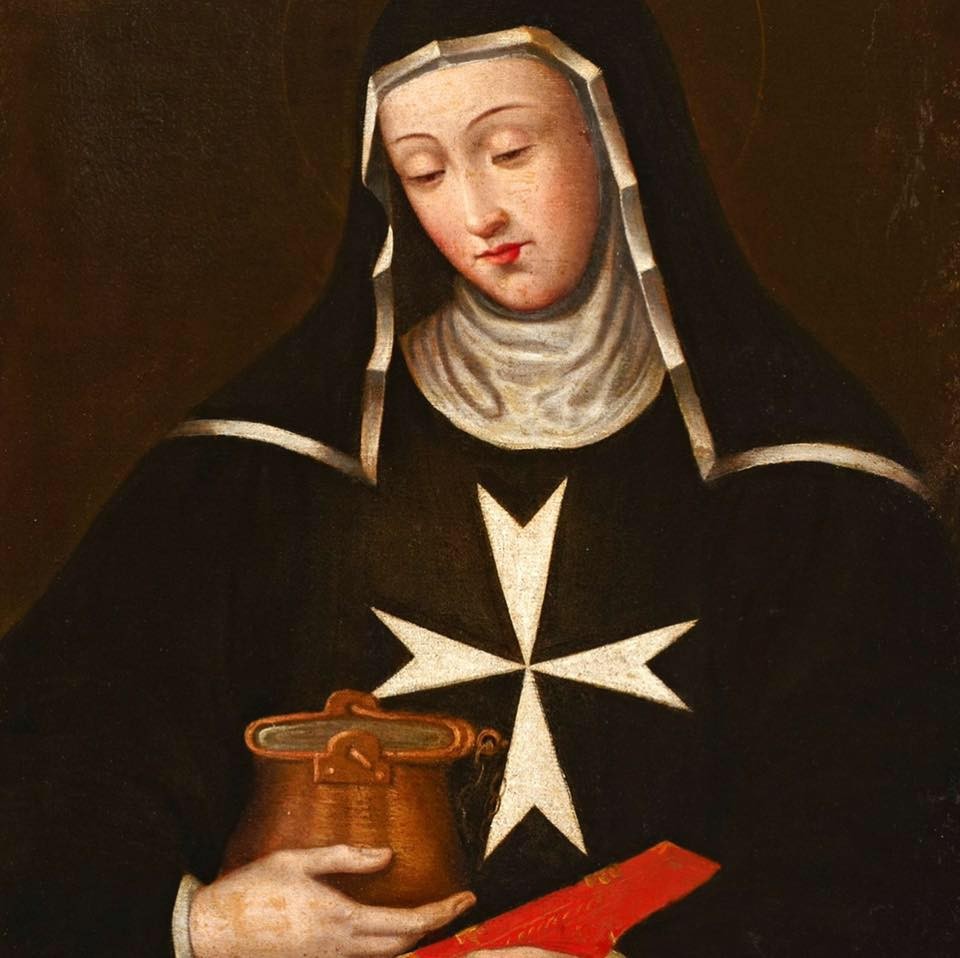
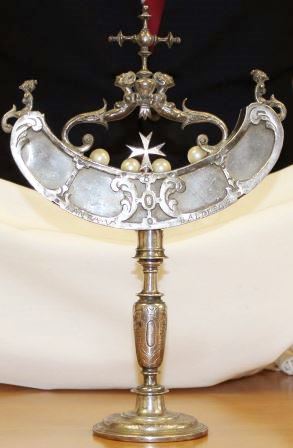
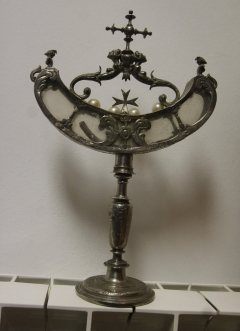
"Hush! Say nothing about it", implored Ubaldesca. But to ask such a thing of a woman is to want more than a miracle, is it not? Everyone was told of the event, and the blessed bowl has been kept as a relic.
In the garden of the convent of Carraia, in the 17th century, crosses along the paths could still be seen; they had been carried by the saint herself to make a way of the cross, kissing them one after the other. And as she gave herself up to that pious exercise, a celestial fragrance surrounded and intoxicated her.
But one day when she was away begging, as she crossed the "Bridge of the Thorn", bordered by houses according to custom, there fell from a building yard a stone which wounded our holy woman in the head. Her errands finished, she returned bleeding to the convent and refused the ministrations of the sisters. "I place myself in the hands of Our Lo!" she affirmed. But the wound became infected; it filled with purulence and vermin. Ubaldesca, only too happy to do penance in this way, continued to refuse any help. She was at death's door.
Frà Doctus de Oculis, a professed member of the Order and curate of the Holy Sepulchre, seeing her in desperate straits, said to the sisters, without the patient's knowledge:
"Day or night, let me know, for I want to be near Sister Ubaldesca during her last moment".
The saint heard this conversation in the spirit and, to the greatest astonishment of everyone, she raised her voice:
"Father, you will not be able to arrive in time!"
The event confirmed the prophecy.
In 1206, or 1207, on the day of the Holy Trinity, the abbess and the community saw the soul of Saint Ubaldesca mount to heaven, accompanied by a multitude of angels singing:
Veni Sponsa Christi, accipe coronam.
And her sisters were all greatly consoled.
The body was kept for seven days. Fra Doctus watched over it, hoping to get a sign from the dead woman whom he had been unable to help. On the morning of the seventh day, he saw her on a chariot of glory, entering heaven surrounded by a chorus of angels who were chanting in and heavenly manner the anthem Glorious Deus in sanctis suis. Thus was her soul set to rest. He had a monument erected in which the very holy body was placed amidst a great concourse of people sorrowing and grieving. But soon that mourning was turned into triumph, for 22 invalids who had had themselves carried along the path of the procession were cured.
The kindness of the saint did not cease with these miracles. Others were to follow. A coin maker of Pisa had a sliver of bronze in his hand which tortured him so much that he had spasms and convulsions by day and by night. He had recourse to the best doctors of the city and even of Florence, but he obtained no relief. In despair, he went to the holy tomb to pray for Saint Ubaldesca's help. The sliver immediately dropped out of his hand.
Also, when Frà Bartolo de' Palmieri, Prior of the Holy Sepulchre, had received a special spiritual favour from the holy woman, he instituted in thanksgiving her feast on the day of the Holy Trinity. He had her body put in a reliquary, but granted her head to the sisters of Carraia.
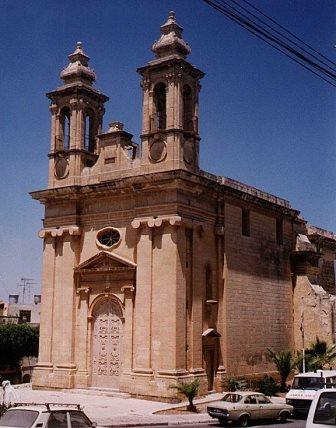
Later, Grandmaster Frà Hugh de Loubenx Verdala ordered that several relics of the saint be brought to Valletta in Malta. They mere placed, on May 28, 1587, in the main chapel of the monastery, by permission of Pope Sixtus V, set forth in a brief dated September 20, 1586. The feast day was set on May 28 of each year, the anniversary of her translation, as was already being done in Pisa. A plenary indulgence in perpetuity was granted to all the visitors of the precious remains on that day. Then in 1636, a church was founded in honour of and dedicated to Saint Ubaldesca in the island of Malta.
What remained of her body in Pisa was destroyed at the same time as the convent, in 1808, by the French who were still animated by the spirit of the Revolution.
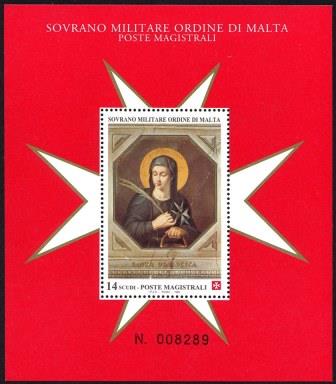
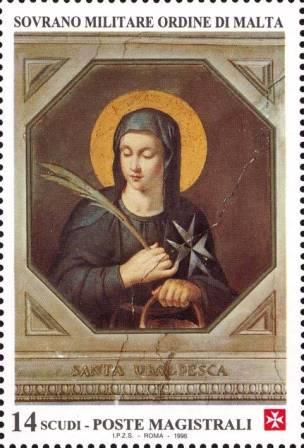
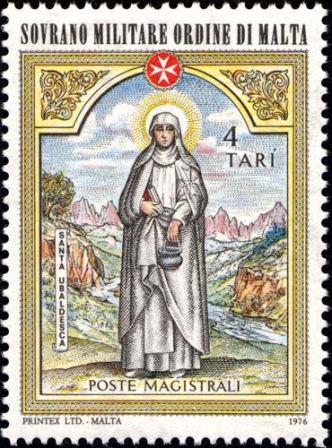
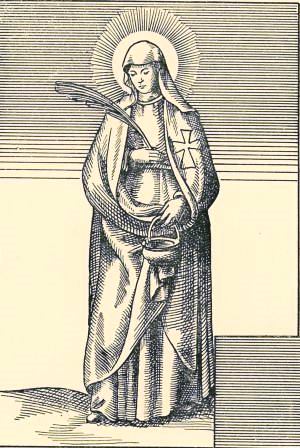
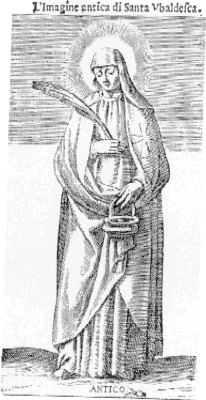
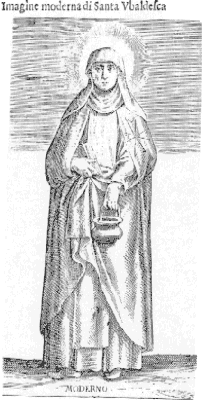
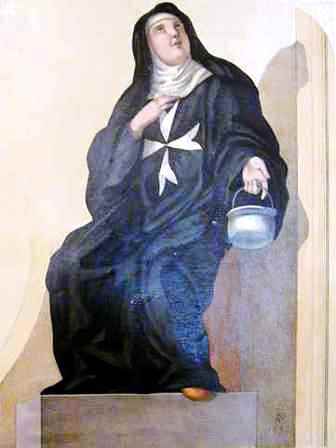
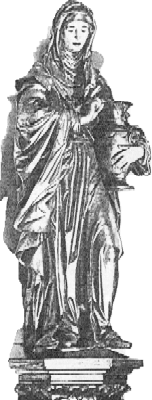
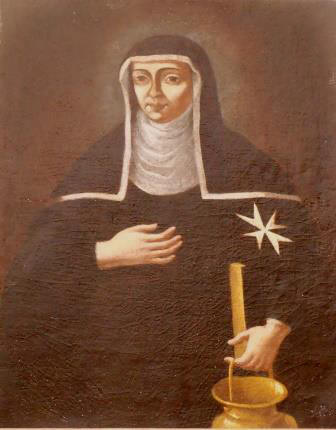
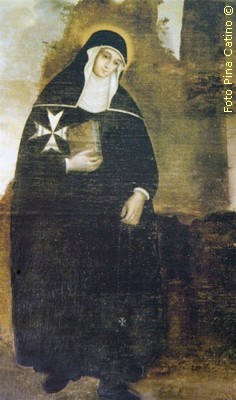
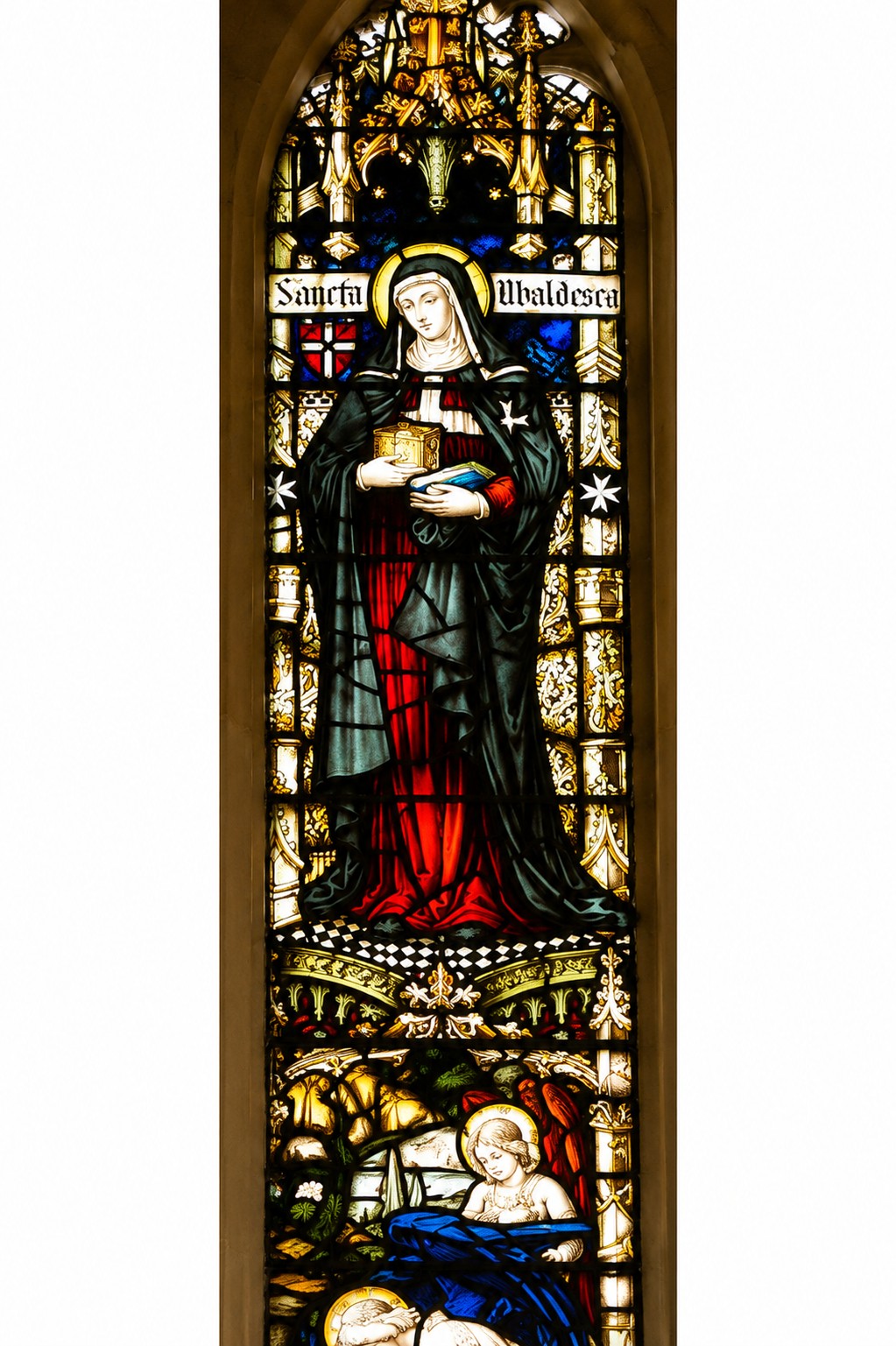
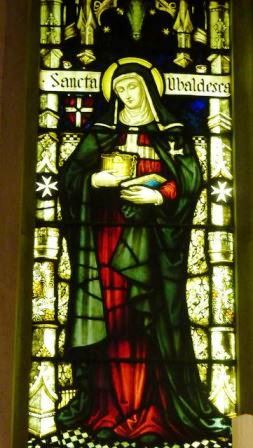
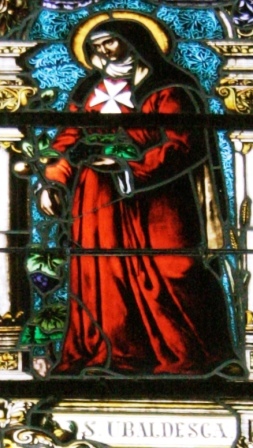
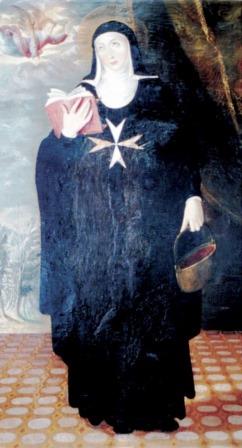
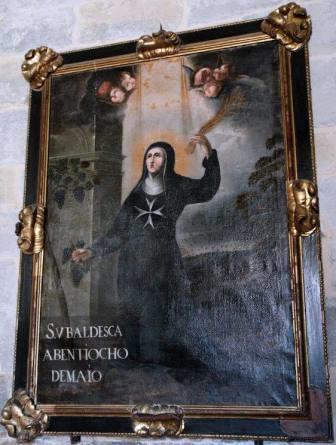
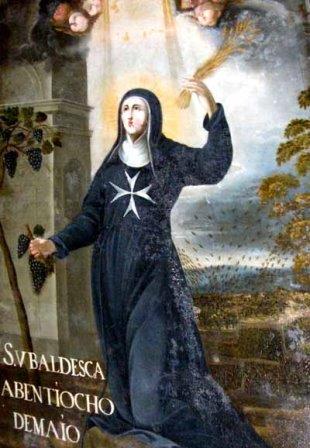
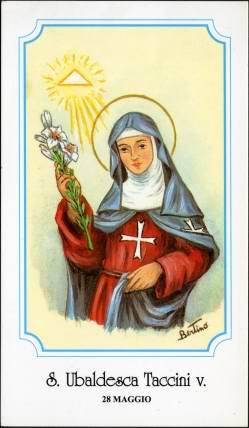
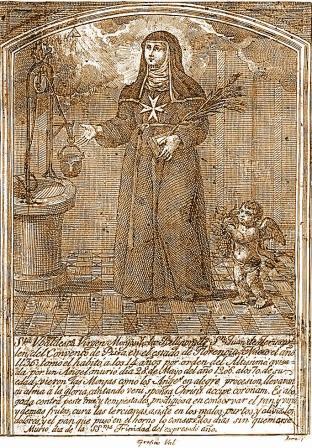
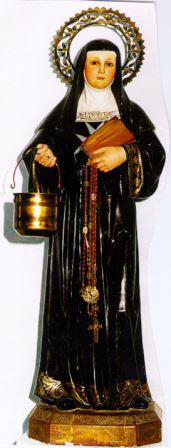
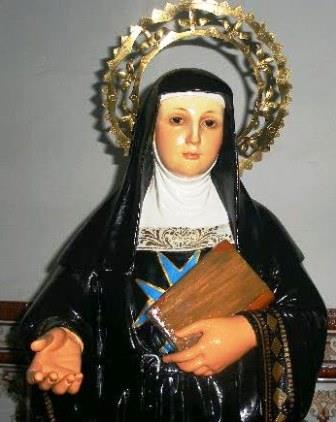
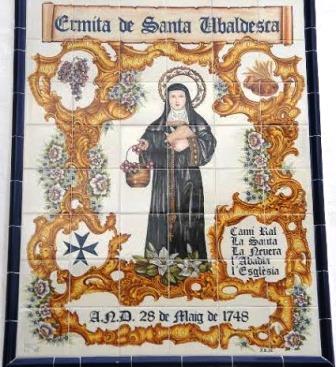
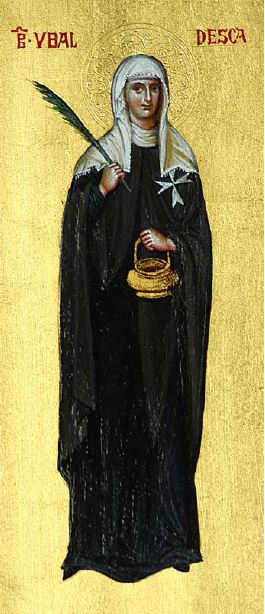
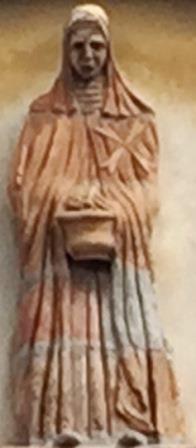
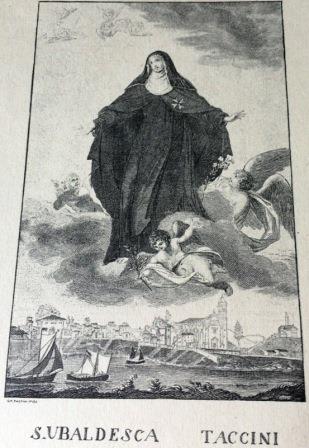
The saint is represented in her pictures carrying the bowl of the miracle of the water and the palm of martyrdom won by her sufferings.
From this edifying life, we learn that sanctity is independent of titles and honours, birth and the world, and that the love of God and of the Rule, lived simply day by day, bears a soul to its highest degree of perfection.
May we, through the intercession of this virgin, obtain in truth the three great virtues which she practiced so well: chastity, poverty, obedience. And, in addition, her smile for everyone.
(From: Ducaud-Bourget, Msgr. François: The Spiritual Heritage of The Sovereign Military Order of Malta, Vatican 1958
An E-Mail received on 2 January 2000 by the web servant:
Buonasera , nel leggere le agiografie dei santi dell Ordine ho riscontrato un
grave errore riguardo alle vicende storiche delle reliquie di S, Ubaldesca; nel
sito si afferma che le spoglie mortali delja santa furono distrutte dai soldati
Napoleonici nel 1808 insieme al convento nel quale si trovavano. Quello che
avete scritto non è vero poiche le reliquie di S: Ubaldesca sono attualmente
custodite e venerate con molto affetto nella chiesa parrocchiale di Calcinaia in
provincia di Pisa. anche se la distruzione delle reliquie fosse avvenuta non
avrebbe potuto essere totale perchè le monache di S. Domenico custodivano sol
il cranio della santa il resto del corpo eranella chiesa priorale del santo
Sepolcro sempre in Pisa dove rimasero fino al 1924(traslazione di tutto il corpo
a Calcinaia paese natio della santa.
Grazie di avermi prestato attenzione.
C.R. da Calcinaia (PI) ristorichristian@freedomland.it
Buonasera, in reading the agiografie of the saints dell Order I have found a serious error care to the historical vicissitudes of the reliquie of S, Ubaldesca; in the situated one one asserts that the empty mortals delja Saint were destroyed from the Napoleonici soldiers in 1808 with to the convent in which they were found. What you have written the reliquie of S are not true poiche: Ubaldesca currently is guarded and venerate with much affection in the parochial church of Calcinaia in province of Pisa. even if the destruction of the reliquie had happened could not have been total why monache of S. the Domenico priorale church of the Sepolcro saint guarded sol the skull of the saint the rest of the body eranella always in Pisa where they remained until the 1924(traslazione of all the body to Calcinaia country natio of the saint. Thanks of avermi lend attention. C.R. from Calcinaia (DEVOUT) ristorichristian@freedomland.it
Santi, beati e testimoni - Dizionario dei nomi
Santa Ubaldesca Taccini
Parrochia di Calcinaia San Giovanni Battista
http://rcnarchive.rcn.org.uk/data/VOLUME089-1941/page137-volume89-august1941.pdf
http://rcnarchive.rcn.org.uk/data/VOLUME089-1941/page138-volume89-august1941.pdf
http://rcnarchive.rcn.org.uk/data/VOLUME089-1941/page139-volume89-august1941.pdf